All storiesHollin · No. 14, Salt
Places
The salt pans at Morrow Ness
For three generations the Marsh family has raked sea salt by hand from a strip of tidal flat that most maps leave blank. Ada Marsh shows us how slow a summer can be.
Words by Elin VargaPhotographs by Tobias Reyne3 min read
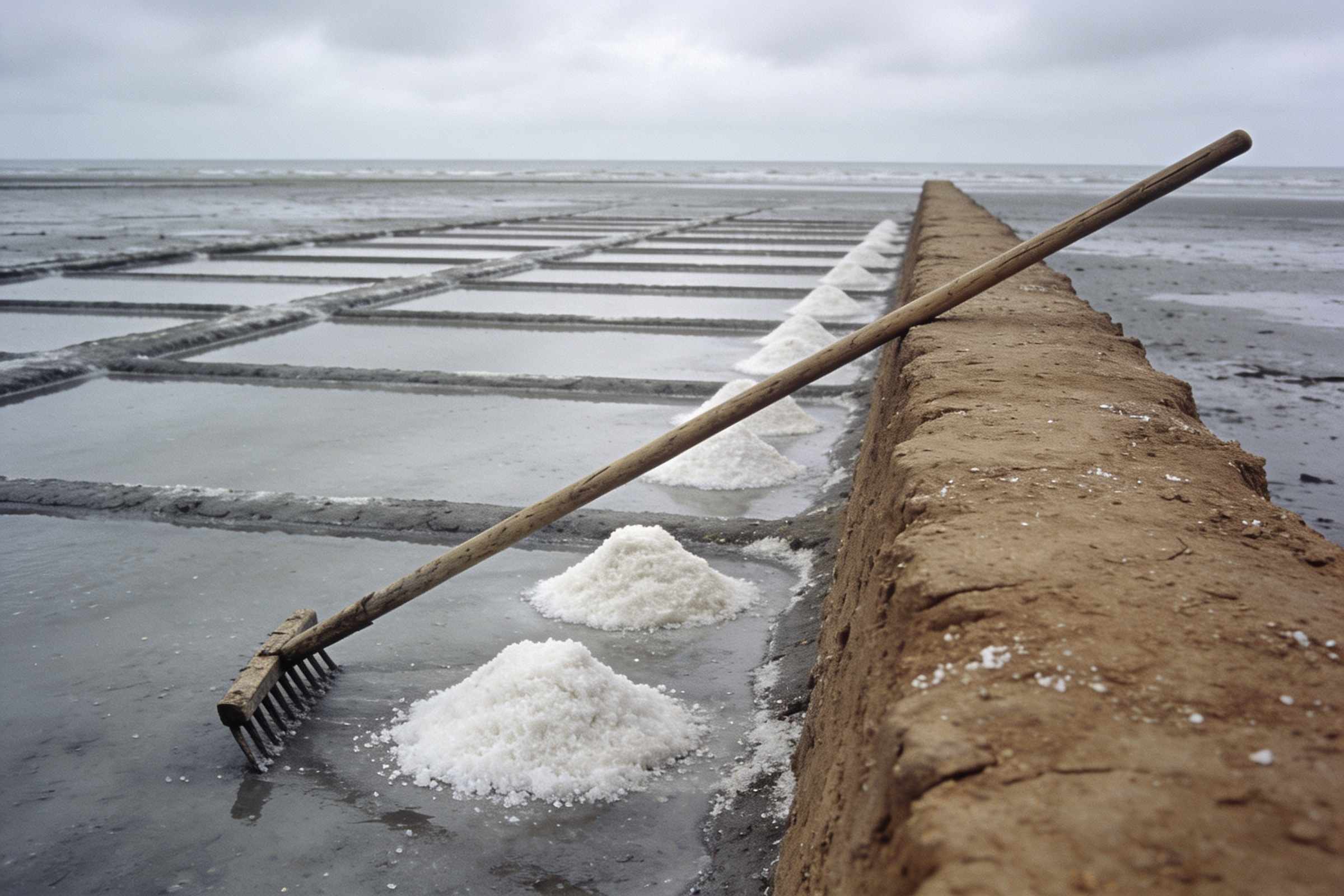
The road to Morrow Ness gives up about a mile before the sea. After that there is a track, then a path of duckboards laid over the mud, and then, quite suddenly, a grid of shallow pans the colour of a pewter sky, each one holding a few inches of water and a thin white crust.
Ada Marsh has been raking salt here since she was nine. Her grandfather cut the first pans in the spring after the war, when salt was rationed and the flat was nobody’s. Her mother kept them going through the years when nobody wanted grey salt from a muddy coast. Now chefs drive up from the city to collect it in paper sacks, and Ada, who is sixty-one, still does most of the raking herself.
“People think it’s the sea that makes the salt,” she says, crouching at the edge of the lowest pan. “It’s the sun and the wind. The sea just brings the water.”
Twice a month, at the springs
The system is older than the family. At the biggest tides of the month, the spring tides, seawater spills over a low sluice into a settling pond, where the mud drops out. From there it is let, a little at a time, into a chain of pans, each one shallower and warmer than the last. By the time the water reaches the final pans it is so heavy with salt that crystals start to form on the surface, a fragile skin that the wind pushes into drifts.
You can’t hurry salt. The sun does the work. All I do is wait, and rake, and wait.
On a good day in August, with a dry wind off the land, the last pans can be raked twice. On a wet week they give nothing at all. Ada keeps a ledger in pencil, one line a day, going back to 1987: the weather, the wind, the weight. The best year was 2018. The worst was last summer, when it rained for most of July and she raked less than a tenth of a normal harvest.
The rake and the hill
The rake is wooden, with a long ash handle and a blade of beech that her nephew replaces every few seasons. Metal would scratch the clay floor of the pans and muddy the salt. She draws the crystals towards her in long, unhurried strokes and heaps them on the wall in small white hills to drain. By evening the hills have shrunk by a third, and she carries them up to the drying shed in a pair of old fish baskets.
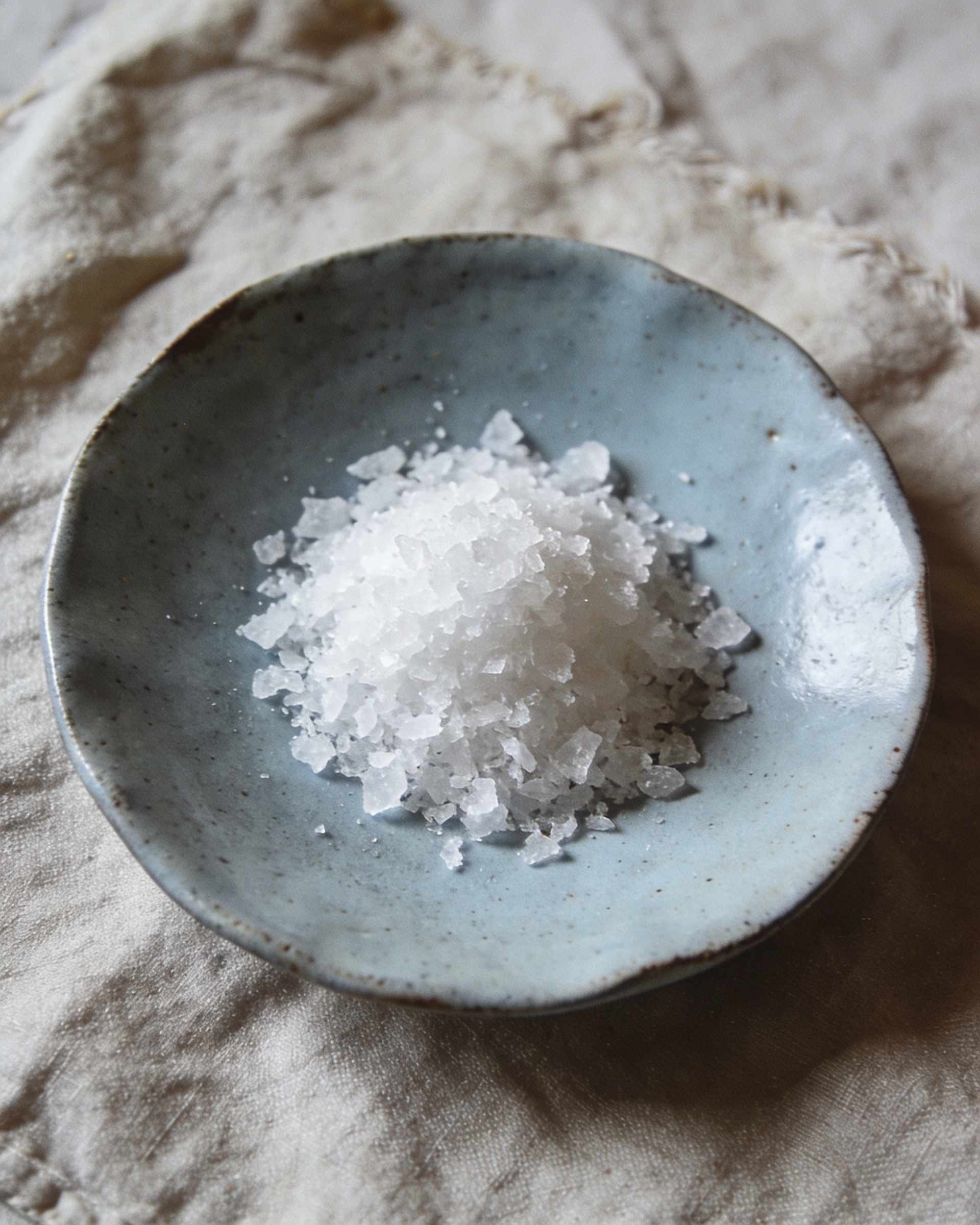
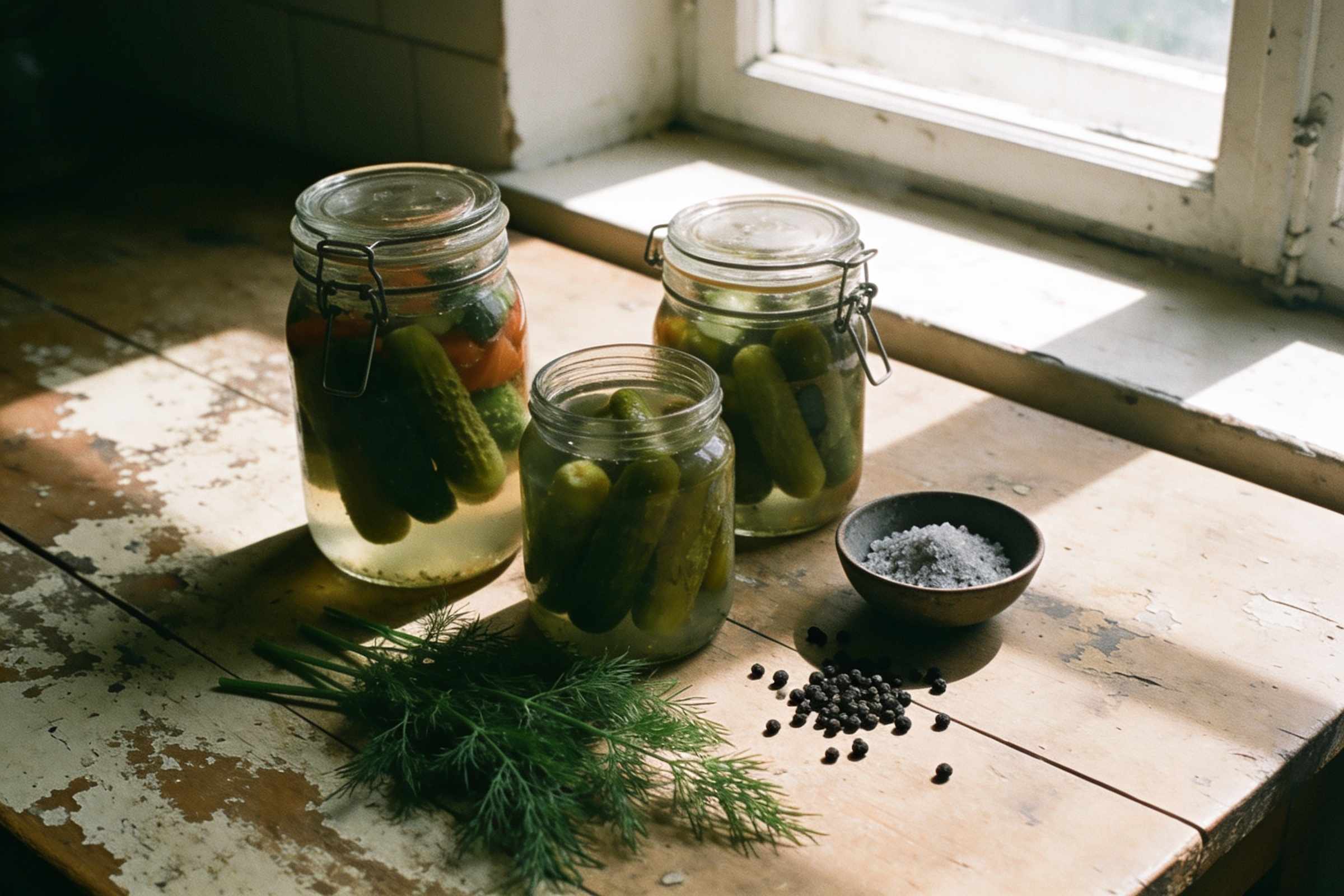
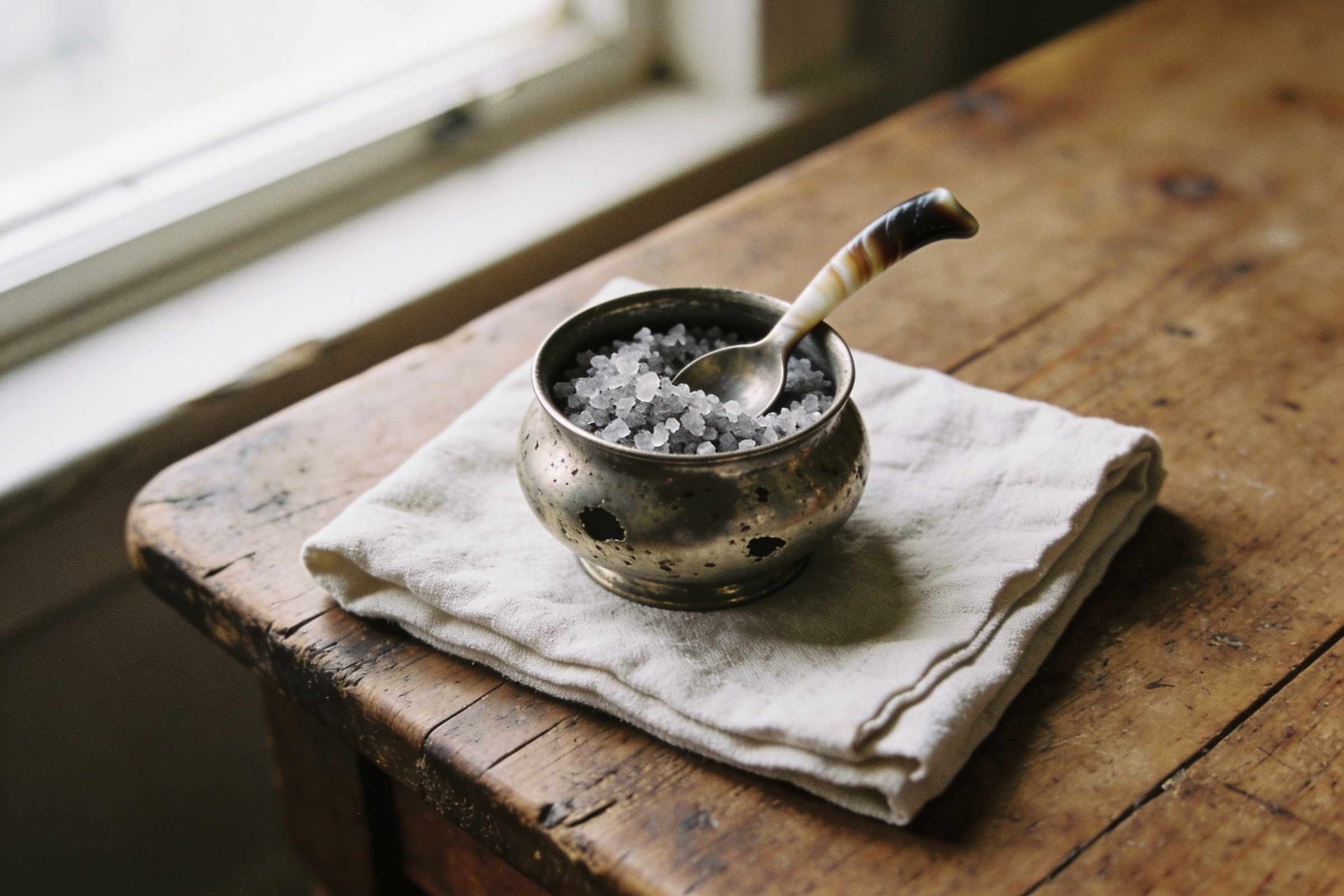
What comes out of the shed is not the white salt of a supermarket shaker. It is damp, slightly grey, with crystals the size of lentils and a taste that Ada describes, after some thought, as “the smell of the flat at low tide, but in your mouth.” Most of it goes to a handful of restaurants and to the shop in the village. Some goes into the brine on page 34.
When we leave, the tide is turning. Ada does not look up. There is a crust forming on the last pan, and the wind is still in the east.
End of story.