All storiesHollin · No. 14, Salt
Conversations
Forty winters at the smokehouse
Ida Brann has smoked fish in the same brick shed at Saltcote since 1986. She talked to us about oak, patience, and why she still won't use a thermometer.
Words by Ruth CalderPhotographs by Tobias Reyne2 min read
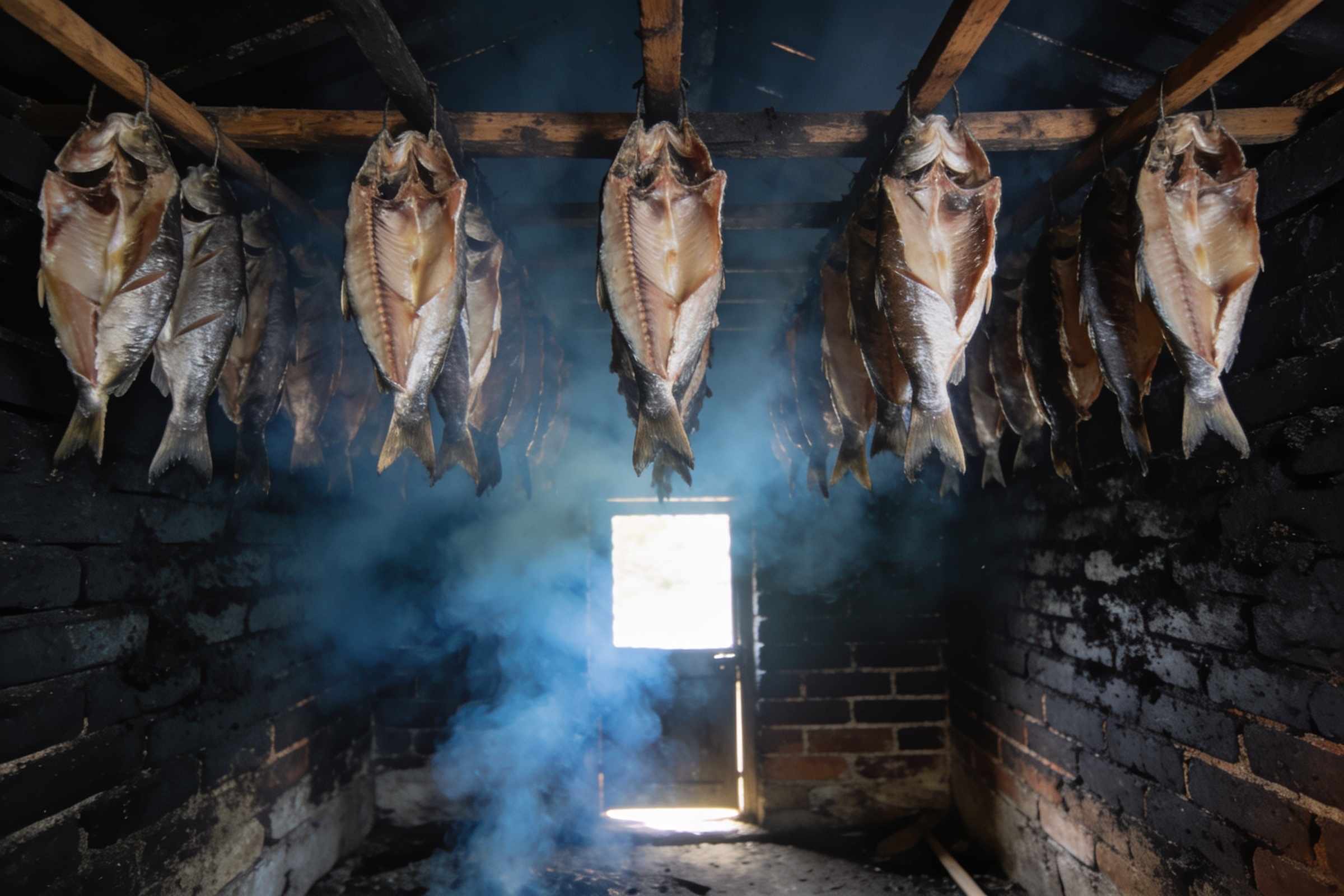
The smokehouse at Saltcote stands at the end of the quay, a tall brick shed with no windows and a door that never quite closes. Inside, the walls are black and soft with forty years of tar, and the air tastes of oak. Ida Brann was sitting on an upturned crate outside when we arrived, waiting for the fire to settle.
How did you start?
My husband’s uncle had the place, and he wanted someone to help in the winter, when the herring came in. I said I’d do one season. That was 1986.
What’s the first thing you learned?
That the fire isn’t the point. Everybody new wants a big fire. You want almost no fire at all. You want a bed of sawdust smouldering so slowly you can hardly see it, and the smoke coming up thin and blue. White smoke is wet. Yellow smoke is bitter. Blue is what you’re after.
I’ve never used a thermometer in there. The fish tell you. The smoke tells you. If you’re watching a dial, you’re not watching the fish.
How long does a smoke take?
For kippers, a night. For a cold-smoked side of salmon, two days, maybe three, depending on the wind. When it’s blowing from the sea the shed draws differently, everything goes faster. I keep the door a hand’s width open and move it during the day. People laugh, but that door is the most important tool I have.
Has anything changed?
The fish have. There used to be herring right outside, now they come in a lorry. The people have changed: when I started, everyone in the village smoked something. Now it’s me, and a young couple up the coast who rang me to ask about oak. I told them what I’m telling you: dry it a year, and use the sawdust, not the chips.
And you?
My knees have changed. (She laughs.) I’ll do a few more winters. Someone will take it on. The shed’s been smoking since before the war; it’d be a shame to let it go cold.
Ida Brann’s kippers are sold from the shed door on Saturdays from October to March, and from Fenn & Daughter in Saltcote all year.
End of story.