All storiesHollin · No. 11, Clay
Essays
On mending a cracked bowl
The bowl had been my grandmother's, and the crack had been there as long as I could remember. An essay about repair, gold, and learning not to hide the break.
Words by Marta Quell2 min read
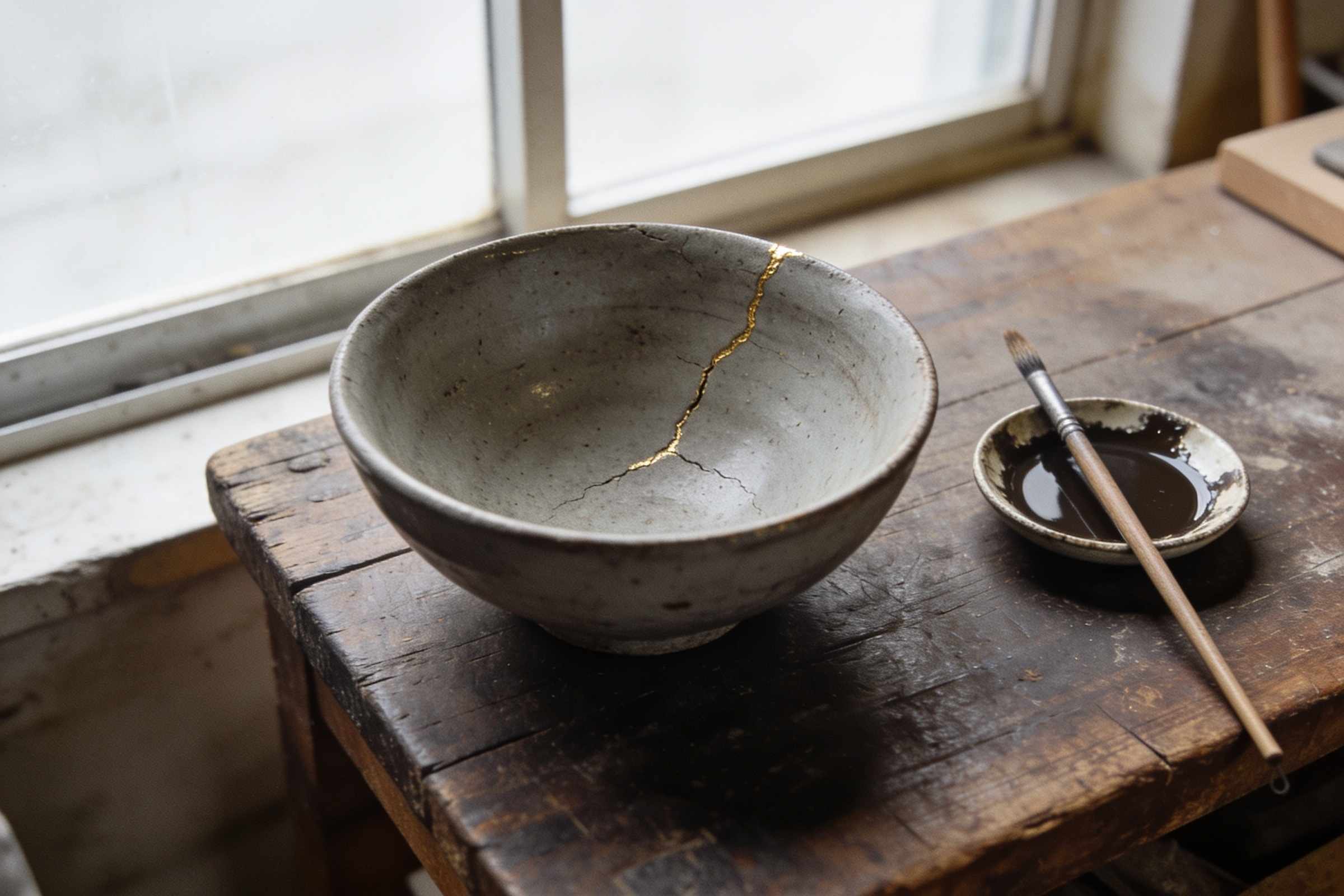
The bowl was never beautiful. It was grey stoneware, slightly lopsided, with a glaze that had gone the colour of a winter sea, and it had a crack running from the rim almost to the foot that my grandmother insisted was “only on the outside.” She used it every day for forty years. When she died it came to me, and I put it in a cupboard because I was afraid of the crack.
Last winter I took it to a repairer in Wrenford who mends ceramics the slow way, with lacquer made from tree sap, built up in thin layers over weeks and finished with a dusting of gold along the seam. It’s an old technique and, she warned me, not a quick or cheap one. Each layer has to cure in a damp box for days before the next goes on.
The line, not the bowl
When she gave it back, the crack was still there. It was the most visible thing about the bowl now: a thin, uneven line of gold running from the rim towards the foot, following every hesitation the clay had made when it broke. The bowl was whole, and it was obviously mended, and the mend was the best thing about it.
We spend so much effort hiding the places where things broke. It had never occurred to me that the break could be the part worth looking at.
I use it every day now, as she did. It holds bread dough on Saturdays and lemons the rest of the week. Every time I pick it up my thumb finds the seam.
A note: The traditional technique uses urushi, the lacquer of a tree native to East Asia, which can irritate the skin until cured. Repairers who work with it take years to learn; this is not a weekend project.
End of story.