All storiesHollin · No. 12, Smoke
Places
A week with the charcoal burners
Deep in the beech woods above Ollerby, a small crew still makes charcoal the old way, in an earth clamp that has to be watched day and night. We stayed for a burn.
Words by Elin VargaPhotographs by Tobias Reyne2 min read
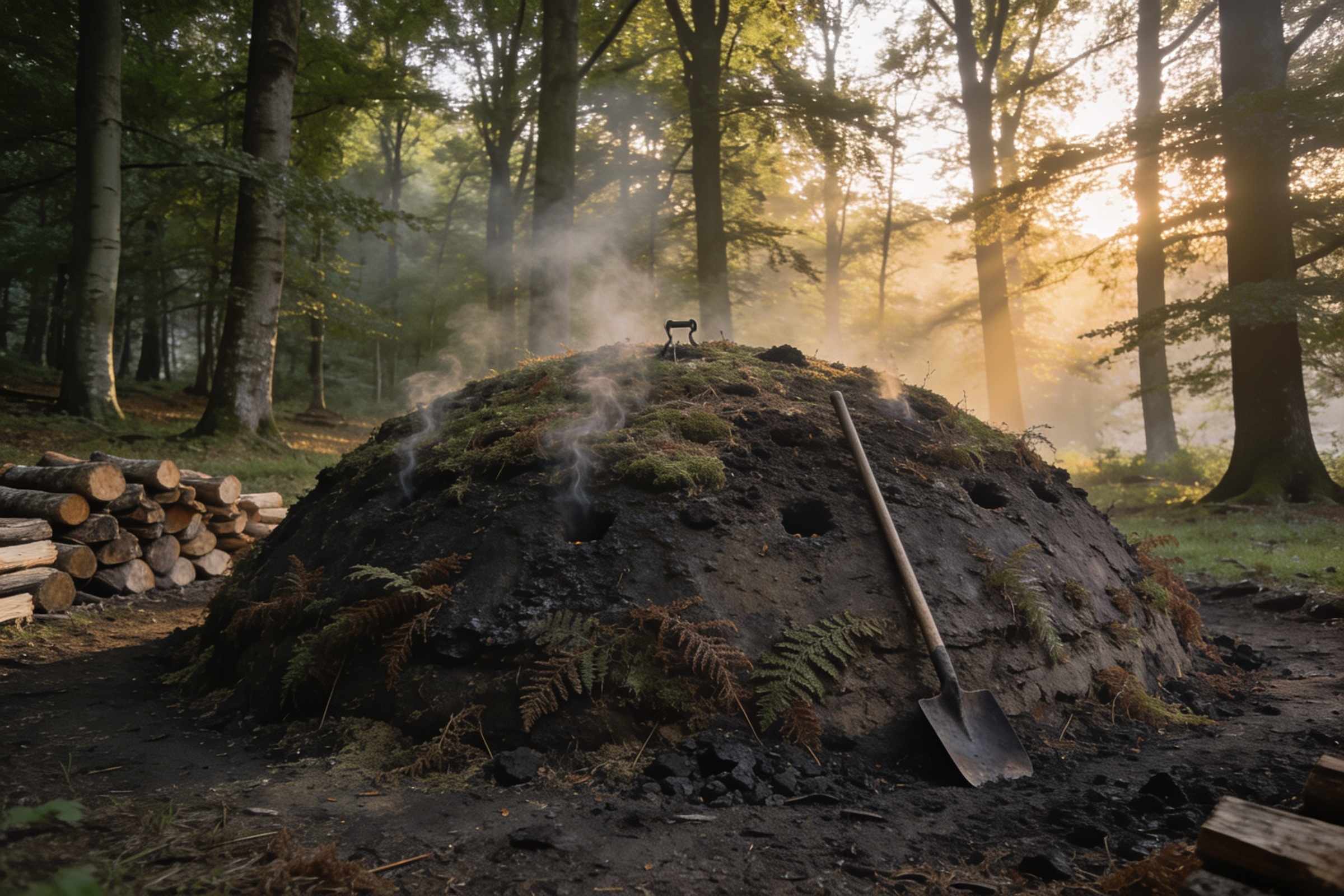
The clamp looks like a low, smoking hill. Under its skin of turf and soil there are about four tonnes of beech and hazel, stacked by hand around a central chimney, and for five days and nights the fire inside it has to be kept just alive enough to drive the water out of the wood and not so alive that it burns away.
That is the whole craft, says Will Rudd, who has been burning charcoal in these woods for twenty years: managing a fire you can’t see. He does it with a shovel of soil and a lot of looking. A wisp of smoke from the wrong place means a hole in the skin, air getting in, the wood starting to burn. He walks round the clamp every hour, day and night, patching.
Sleeping by the fire
The crew is three people in a good week, two in a bad one. They take turns to sleep in a canvas tent beside the clamp, and the burners sleep beside it all week, a few hours at a time. Nobody goes home until it’s done.
You learn to read smoke the way a sailor reads the sky. Thick and white, all’s well. Thin and blue, it’s nearly done. Yellow, you run.
On the fifth morning the smoke turns thin and blue, and Will seals the clamp completely and lets it cool for two days. When they finally open it, the wood has become something else: black, light, ringing like china when two pieces knock together.
Most of it goes to people who cook over it, and to a few blacksmiths who say nothing else burns as clean. It’s more expensive than the charcoal at the petrol station, and it’s not the same thing at all. You only have to sit up one night beside a clamp to understand why.
End of story.